

Dad, Evolutionary Neuroscientist, Hunter-Gatherer
Dr. STEVEN m. PLATEK
“Nature holds the key to our aesthetic, intellectual, cognitive and even spiritual satisfaction.” – E.O. Wilson
about steve
Steven is an evolutionary cognitive neuroscientist. Currently, he's professor of psychology at Georgia Gwinnett College where he teaches courses on neuroscience, animal behavior, and career and advancement strategies. He's published over 100 peer-reviewed scientific articles. Much of his work focuses on how the brain and mind construct a sense of self- and other- awareness and how various attributes and experiences can cause one's sense of self (and therefore also their sense of other) go awry. He's also published in the area of the human sexual response - everything from attractiveness studies to the sedative and antidepressant effects of sex to the possible adaptive mechanism of sexual activity and pleasure. He's presented his work in over 30 countries and various projects of his have been covered in media in over 60.
Outside of his academic and professional pursuits he is a father of 4. He prides himself on instilling a great sense of self-awareness in his children all of whom have adopted strong, independent personalities. He has studied and prides himself on the importance of the role of fathers in child development; also an area of academic interest.
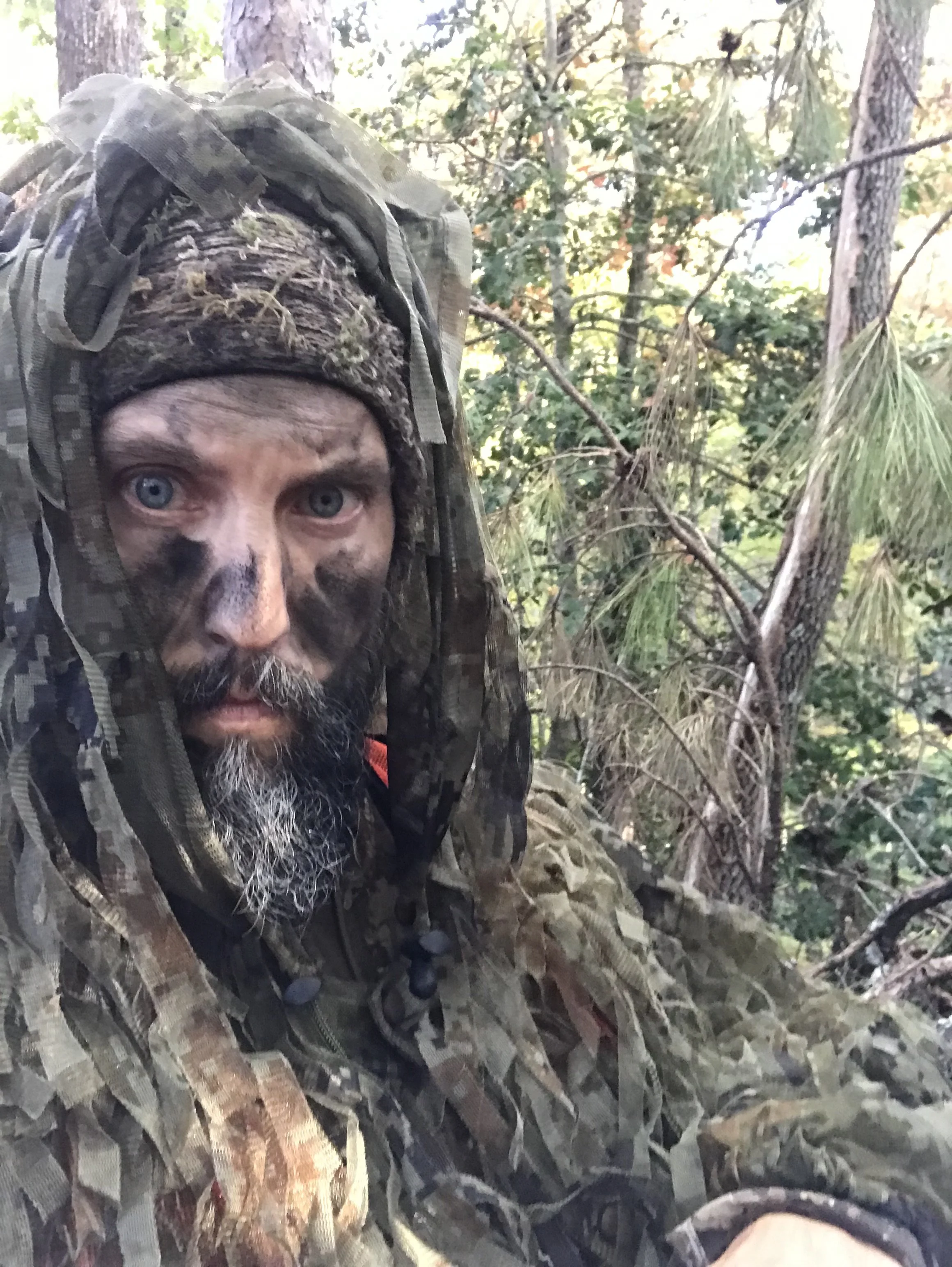
Lastly, Professor Platek is an avid outdoorsman. He and his two boys can regularly be found fishing, camping, or hunting. In line with his evolutionary studies, he's adopted a primitive way of engaging the outdoors and enjoys crafting his own archery equipment - bows and arrows and stone points - in his pursuit of big game animals. His family persists almost exclusively on hunted, foraged, and gathered foods.
He feels strongly that a sense of self both fosters and is fostered by connection with others. In addition to that, he hopes to bring awareness and skills to people so that they can experience recovery from modern mismatch - the detrimental role that modernity plays on our health. He encourages and teaches people how to fish, hunt, and camp; he helps people struggle through the boredom of a minimalist life by helping them engage fully with a rewilding of self.
MODERN MISMATCH
Why in a world where we have access to almost anything we need at a moment’s notice; struggle for virtually nothing; have access to modern medicine and industrialization are we so unwell? At the heart of that question is MODERN MISMATCH.
Modern Mismatch is the growing gap between the environment our brains and bodies were shaped by over hundreds of thousands of years of evolution and the radically different world we actually live in today. Our ancestral past demanded physical effort to obtain food, sunlight to regulate our biology, genuine social bonds forged through shared struggle, and meaningful engagement with the natural world. The modern environment has replaced nearly all of that with convenience, artificial light, digital simulation, and sedentary comfort — and our nervous systems, hormonal systems, and psychological architecture were never designed for it. The result is an ever growing gap that accounts for why some people feel so sick.
The effects of this mismatch are wide-ranging and often invisible precisely because they become “normal.” Chronic low-grade anxiety, poor sleep, metabolic dysfunction, difficulty concentrating, a persistent sense of emptiness despite material comfort, and a craving for something you can't quite put finger on — modern mismatch doesn’t view these as random. They are predictable downstream consequences of a biology running ancient software in a radically novel world. Because the mismatch is baked into everyday life — in the food system, the work structure, the entertainment landscape, the social and romantic environment — most people never connect their struggles to a root cause, or etiology. They treat symptoms and not cause.
Understanding and actively closing that gap is what transforms scattered self-improvement efforts into coherent, lasting change. When you align your daily behavior with the conditions your biology actually thrives under — real physical exertion, time in nature, earned rest, genuine community, and purposeful challenge — you stop fighting your own nervous system and start working with it. The benefits aren't siloed: better sleep sharpens cognition, physical effort stabilizes mood, meaningful challenge builds identity and resilience. Each alignment compounds the others, which is why addressing mismatch at the root level produces the kind of change that sticks — not because of willpower, but because you've finally given your biology what it was built for.
Most of these changes aren’t radical, but do not fit into our busy daily lives - we are “too busy” to find time. I often tell my clients that you can pay for it now - high quality food, time with loved ones, behavioral change, etc, or you can pay for it later - medical and hospital costs. For example, many of us live sedentary lives - we sit in a car, on a couch, at a desk for work or school. Sitting, particularly in a chair, is not good for you at all. In fact, sedentary lifestyle can contribute to all sorts of medical ailments ranging from stiff joints to cardiovascular events. When people hear “you have to walk 5,000-10,000 steps per day” they see it as insurmountable. But modern mismatch doesn’t work like that, per se. Going from 1,300 steps a day to 10,000 steps a day is a huge jump. And most people would allot a single period of the day, say 1 hour after work, to do all their steps. And then many people would fail to follow through for any number of reasons. However, adopting a more ancestral lifestyle, one that harnesses your bodies natural programs, like taking a 5-10 minute walk after your breakfast, lunch, and dinner can produce measurable changes in health. In fact, a recent study showed that this approach could actually help people overcome the mismatch associated with sitting, regardless of whether they sat for 6 hours a day or 10. Furthermore, this approach chunks the behavior change so that even if you miss one of the walks, you are still getting some benefit at other times of the day.
Our implementation of modern mismatch takes an applied approach. How can we help an individual calculate mismatch cost and how can we develop a plan of action to overcome it. While there are some commonalities in the way mismatch impacts each of us, individual experiences create varying degrees and types of mismatch, which means a change needed for one person may not be the change needed for another. Let us help you calculate your mismatch cost and aid in recovering from the negative impacts of modernity.